

Dr. Deepak Mishra (M12337 )
ABSTRACT:
Aim:
To determine the usefulness of ocular landmarks in craniofacial superimpositions
techniques.
Material and methods:
It is a retrospective observational clinical study done at IMS , BHU , Varanasi
from the data base of criminal cases referred to our center between 2005 to
2016.Total 15 cases were included in the study. Various ocular landmarks were
identified and analyzed for its usefulness in superimposition techniques in Indian
scenario.
Results:
Matching of outer and inner orbital margins constitute of 5-10 percent total
superimposition points and Cornea reflex maintains a straight path with Centre of
optic canal .Orbital margins, eyebrows, orbital margin to center of chin and other
parameters increases the sensitivity and specificity of identification of person.
Ocular parameters contribute almost 30-50 % of total superimposition points.
Conclusion:
Landmarks of eyes are having sensitivity & specificity. Also a landmark for joining
other superimposition points
Introduction:
Superimposition comparisons have developed into a useful tool for assessing
identification of unknown skeletal remains. The identification of skeletal remains
is frequently carried out by skull-photo superimposition because a facial photograph can be easily obtained from the victim’s family .Above technique is
done with the help of three things Photographs, Video and Computer based
software. It is highly useful in the criminal cases. This is commonly used in
western countries and also in India. There are few centers and experts of this
technique in India, our center is among one of them.
Material and Methods:
It is a retrospective observational clinical study done at IMS , BHU , Varanasi from
the data base of criminal cases referred to our center between 2005 to 2016.Total
15 cases were included in the study. Various ocular landmarks were identified
and analyzed for its usefulness in superimposition techniques in Indian scenario.
Bony landmarks & their respective surface markings on the orbits are matched.
All the features present on face (in the victim’s photographs) should match &
correspond with the provided documented skull .The sensitivity and specificity of
these ocular landmarks were determined and superimposition software was used
for matching.
Observations and Results:
The mean age was 45±1 years and there were 7 female and 8 males in the study.
Matching of outer and inner orbital margins constitute of 5-10 percent total
superimposition points and Cornea reflex maintains a straight path with Centre of
optic canal .Orbital margins, eyebrows, orbital margin to center of chin (Fig 1)and
other parameters increases the sensitivity and specificity of identification of
person (Fig 2). Ocular parameters contribute almost 30-50 % of total
superimposition points.
Conclusion:
Landmarks of eyes are having sensitivity & specificity. It is useful in identification
as well as a point/landmark for other cranio-facial identification points. The use of
superimposition technique is valuable in forensic identification and in crime
detection.
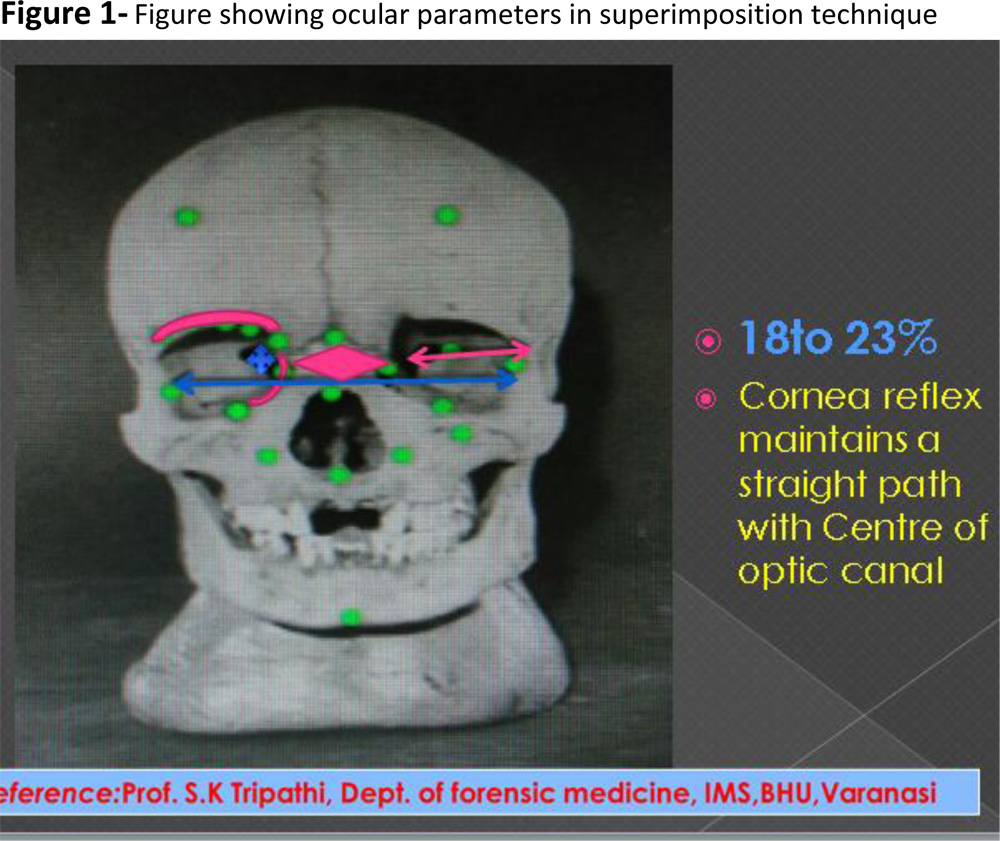
Figure 2- Published in Times of India : 25-11-2015.

References:
1. Austin-Smith D and Mapels WR. The reliability of skull / photograph
superimposition in individual identification, Journal of Forensic Sciences,
1994;39:446.
2. Ross Ann H. Use of digital imaging in the identification of fragmentary
human skeletal remains, 2004;6:4.
3. Stephan CN (2009) Craniofacial identification: techniques of facial
approximation and craniofacial superimposition. In: Blau S, Ubelaker DH
(eds) Handbook of forensic anthropology and archaeology. Left Coast Press,
California, pp 304–321
4. Krogman WM, Iscan MY (1986) The human skeleton in forensic medicine,
2nd edn. Charles C. Thomas, Springfield
5. Laguna M, Martı´ R (2003) Scatter search: methodology and
implementations. Kluwer Academic Publishers, Boston
6. Jayaprakash PT, Srinivasan GJ, Amravaneswaran MG (2001) Craniofacial
morphoanalysis: a new method for enhancing reliability while identifying
skulls by photosuperimposition. Foren Sci Int 117:121–143.
Leave a Comment