

Prof Anthrayose C V Kakkanatt, Dr. Anu F Anand, Dr. Minu Sasikumar, Dr. David Pudukadan, Dr. Anju Kuriakose.
ABSTRACT
BACKGROUND : Corneal diseases are among the major causes of vision loss and blindness in the world today, after cataract and glaucoma. In India, it is estimated that there are approximately 6.8 million people who have vision less than 6/60 in at least one eye due to corneal diseases. On an average, the country needs 200,000 corneas in a year, and only 44,806 are collected. Therefore, creating awareness amongst the masses and encouraging them to pledge their eyes for donation is critical. We utilized the help of local voluntary, social, and religious organizations for the implementation of the awareness and motivation program.
METHODOLOGY
We utilized the help of local voluntary, social, and religious organizations for the selection of sites, local publicity, arrangement and mobilization of people and other infrastructure. Schools, colleges, clubs, organizations, trade union offices, public functions, etc were utilized for the arrangement of this awareness and motivation camps.
RESULT
As a result of the eye donation awareness and motivation programs we got 1035 eyes in the past 12years. Starting with 24 eyes in the first year rising to 126eyes in the 12th year. 64% of the eyes received were utilized for keratoplasty and 36% were used for research purposes.
CONCLUSION
Out experiences has convinced us the important role of social and religious organization and its leaders in spreading the message of eye donation among people. These organizations have an active role in creating awareness and motivation of eye donation to clear the backlog of corneal blindness in India.
INTRODUCTION
Blindness is an important symptom of many eye disorders. Lopez and Murray have estimated the load of blindness as 23 million for the world and 9 million for India. The Disability Adjusted Life Years (DALYS) for the major eye disorders has been estimated at 27 million for the world and 7 million for India. Blindness is one of the major health problem especially in developing countries like India where it leads to loss of many man hours. Blindness continues to be one of the major public health problems in developing countries.1
According to the World Health Organization, corneal diseases are among the major causes of vision loss and blindness in the world today, after cataract and glaucoma. In India, it is estimated that there are approximately 6.8 million people who have vision less than 6/60 in at least one eye due to corneal diseases; of these, about a million have bilateral involvement. It is expected that the number of individuals with unilateral corneal blindness in India will increase to 10.6 million by 2020.According to the National Programme for Control of Blindness (NPCB) estimates, there are currently 120,000 corneal blind persons in the country. According to this estimate there is addition of 25,000-30,000 corneal blindness cases every year in the country. The burden of corneal disease in our country is reflected by the fact that 90% of the global cases of ocular trauma and corneal ulceration leading to corneal blindness occur in developing countries.2
On an average, the country needs 200,000 corneas in a year, and only 44,806 are collected. Out of these, only 46% (20,632 eyes) are utilized for sight restoration as the other 54% do not meet the standards for transplantation. As a result, the patient line-up and wait to get a corneal transplant keeps getting longer with each passing day. Furthermore, the cost of cornea transplant in addition to unavailability for corneas makes it practically impossible for underprivileged people to access these medical remedies. Therefore, creating awareness amongst the masses and encouraging them to pledge their eyes for donation is critical.3
To face the problem of shortage of good donor eyes, in 2005 Jubilee Mission Medical College and Research Institute (JMMC & RI), Thrissur, Kerala started the eye donation motivation programme with the help of social, religious and voluntary organizations in and around our hospital. By the eye donation awareness and motivation programme we were able to procure 1035 donor eyes during the last 12 years (2005- 2016).
REVIEW OF LITERATURE
In a study by Rock D1 et al factors limiting corneal donation at the University Hospital Tübingen were investigated. They retrospectively studied all hospital deaths from January 2012 to December 2015, considering each deceased patient as a potential corneal donor. During this period an ophthalmic resident managed corneal donor procurement on a full-time basis. Various factors limiting corneal donation were examined. Among the 3412 deaths, 2937 (86.1%) displayed nonfulfillment of corneal donation. Consent for corneal donation was obtained in 475 cases (13.9%). The mean annual corneal donation rate was 13.9 donors per 100 deaths (range: 11.2-17.8). The leading causes of nonfulfillment of corneal donations were refusal to donate (49.8%, 1698 cases) and medical contraindications (23.6%, 805 cases). After next-of-kin interview of 2173 potential donors (109 potential donors were excluded because of logistical problems), willingness to participate in corneal donation was present in 475 cases (21.9%), whereas in 1698 cases (78.1%) corneal donation was refused. Their study showed refusal to donate is the most important factor limiting corneal donation. It seems that increasing the knowledge of people about corneal donation through public education and media are necessary to address the corneal shortage.5
A cross-sectional study was conducted at Rural Health and Training Centre (RHTC) of Community Medicine department, Mahatma Gandhi Medical College & Research Institute , Pondicherry. Total 196 adults visiting to RHTC were interviewed after obtaining informed written consent. Of 196 participants, 80.6% subjects were aware about eye donation. Education and occupation had significant association with awareness. Main source of information about eye donation was television (65.2%). The employed persons had significantly more aware about the correct timing to donate eyes. Education and occupation were found to be the predictors for awareness about eye donation. Although the awareness is good in this population, the quantum of people pledged is very low. To make the dream of converting the awareness into pledging and procurement of eyes, the knowledge about eye donation is highly required.4
METHODS FOR MOTIVATION OF EYE DONATION
The task of motivation and actually procuring the eyes require a lot of efforts and dedication. Collection of signed eye donation forms (pledge cards) has a limited impact on actual procurement, but is helpful in creating some awareness among people regarding eye donation.
We have started the programme of eye donation by motivation of public with the help of Eye Bank Association of Kerala which is affiliated to Eye Bank Association of India (EBAI) during 2005-2006. JMMC & RI is an institutional member of EBAI. EBAI is a national organization acting as a resource center for all eye banks and organizations involved in the eye donation movement. The main objectives of EBAI are to increase collection of eyes, introduce uniform standards in eye banks all over the country and to educate public about eye donation and prevention of corneal blindness. Over the past few years EBAI has been receiving support from all quarters.
We utilized the help of local voluntary, social, and religious organizations for the implementation of the programme. The team consist of a project coordinator, corneal surgeons of our hospital, social worker, publication officer, technicians and projector, video, photography and driver of eye bank vehicle. The help of social, religious voluntary organizations were used for selection of sites, local publicity, arrangement and mobilization of people and other infrastructure. Schools, colleges, clubs, organizations, trade union offices, public functions, etc were utilized for the arrangement of this awareness and motivation camps. News paper, all India radio, doordarsan, public announcements, notices etc were used for giving publicity regarding the programs. The program included seminars, study classes, discussions, symposium, question and answer section, lectures and utilized slides, video, films and distributed booklets, posters, eye donation forms etc (Fig 1).
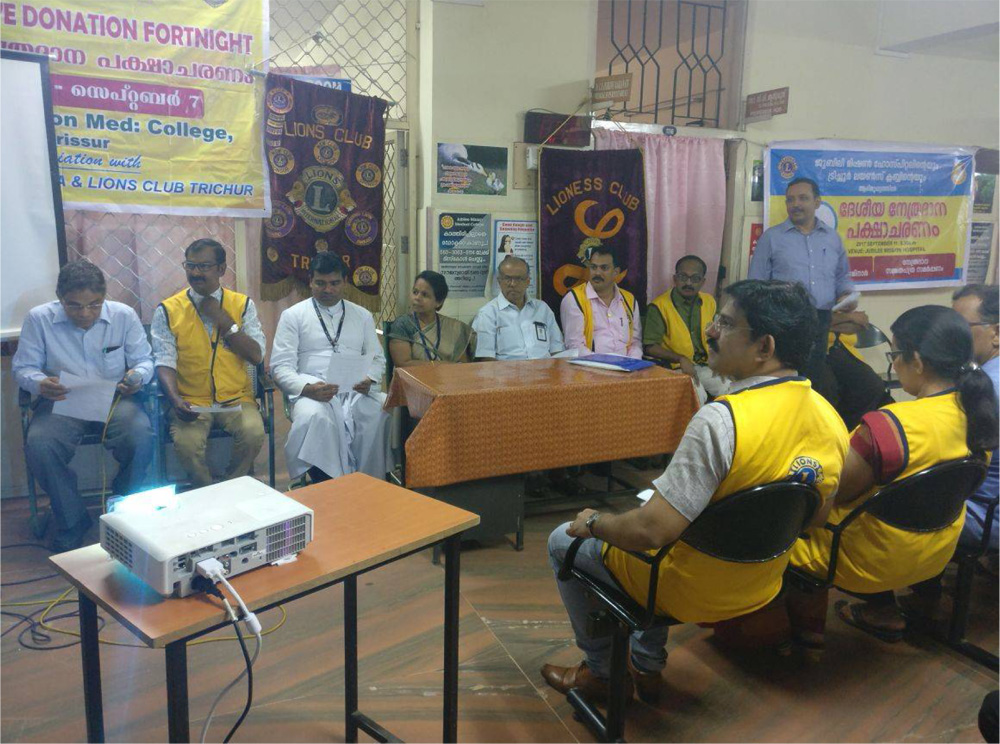
Fig 1:- Eye donation awareness program conducted by our hospital in association with Lions Club.
Clubs like Rotary, Lions, Y’s Mens, Junior Chamber religions and church services organizations (Catholic Youth Movement, Vincent De Paul Society, Christian Life Community, Muslim Education Society etc) came forward for the formaton of local ‘eye donation forum’ for the motivaton, organization, follow up of services and to inform the Eye Bank whenever an eye is donated in their area. These local eye donors forum play a vital role in collecting pledge forms, persuading the relatives at the time of death to donate the eye as well as to inform the eye bank immediately after death of a donor to collect the eye.
RESULTS
As a result of the eye donation awareness and motivation programs we got 1035 eyes in the past 12years.Starting with 24 eyes in the first year rising to 126 eyes in the 12th year.
Table 1: number of eyes obtained and utilized for KP and research.
| Year | Male | Female | Total | For KP | others |
| 2005 | 20 | 4 | 24 | 16 | 8 |
| 2006 | 22 | 15 | 37 | 27 | 10 |
| 2007 | 21 | 34 | 55 | 35 | 20 |
| 2008 | 20 | 39 | 59 | 28 | 31 |
| 2009 | 25 | 41 | 66 | 39 | 27 |
| 2010 | 45 | 48 | 93 | 62 | 31 |
| 2011 | 63 | 39 | 102 | 74 | 28 |
| 2012 | 51 | 55 | 106 | 55 | 51 |
| 2013 | 58 | 61 | 119 | 69 | 50 |
| 2014 | 68 | 57 | 125 | 78 | 47 |
| 2015 | 70 | 53 | 123 | 85 | 38 |
| 2016 | 74 | 52 | 126 | 87 | 39 |
| Total | 538 | 497 | 1035 | 652 | 383 |
MALE : FEMALE RATIO
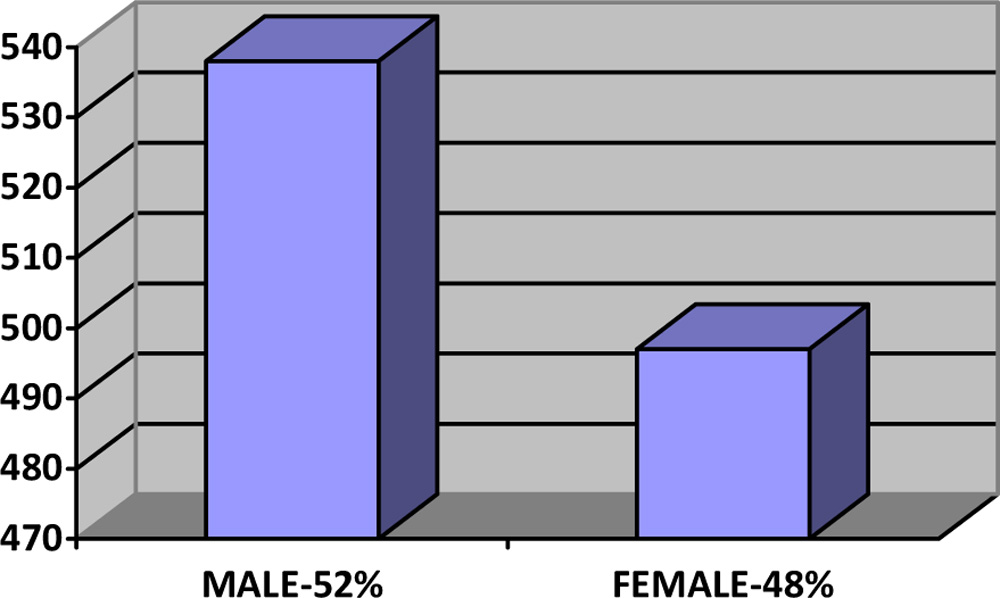
The male female ratio was 52:48 and age of donors varied from 06years to 95 ears. Maximum donors were between 60-70 years group.
NUMBER OF EYE DONATIONS IN EACH YEAR
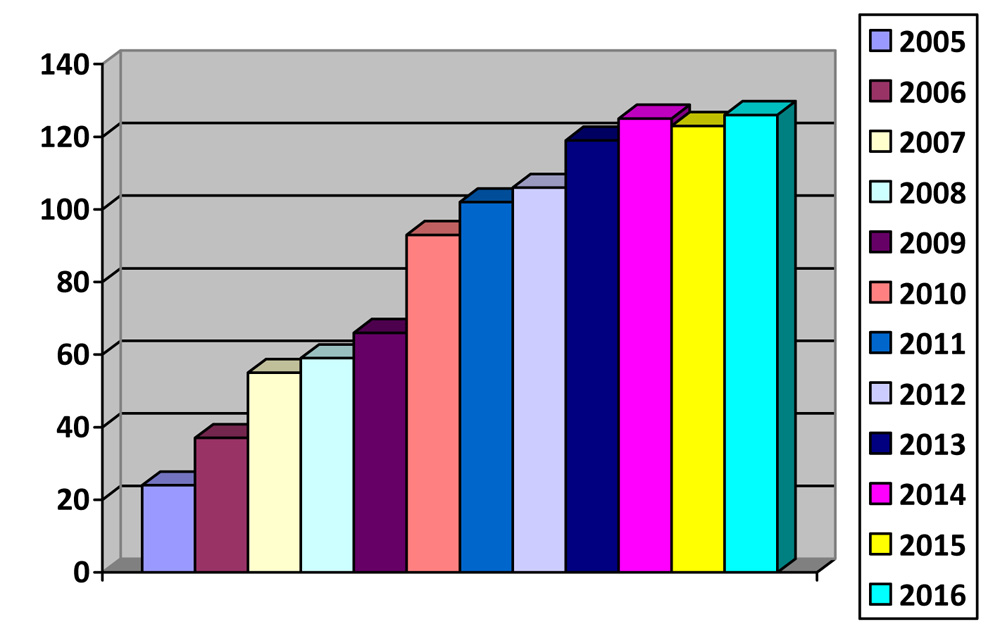
There is gradual increase in the number of eyes obtained for eye donation from 2005. Only 24 eye donations in 2005 which improved to 126 by 2016, due to various motivation programs.
NUMBER OF EYES USED FOR TRANSPLANTATION
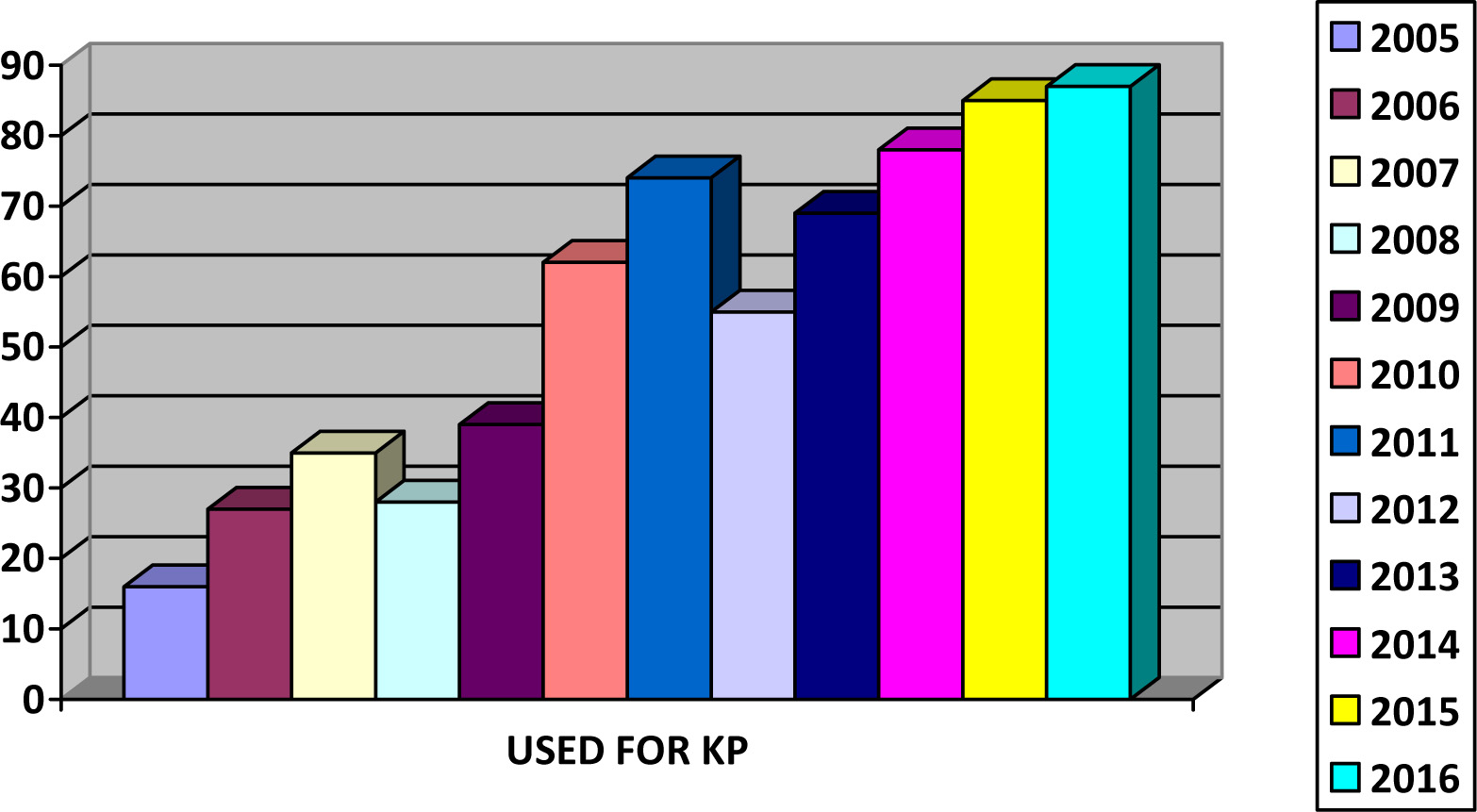
Each pair of eyes are calculated as one here. In 2005 only 16 were utilized for corneal transplantation, which increased to 87 in 2016
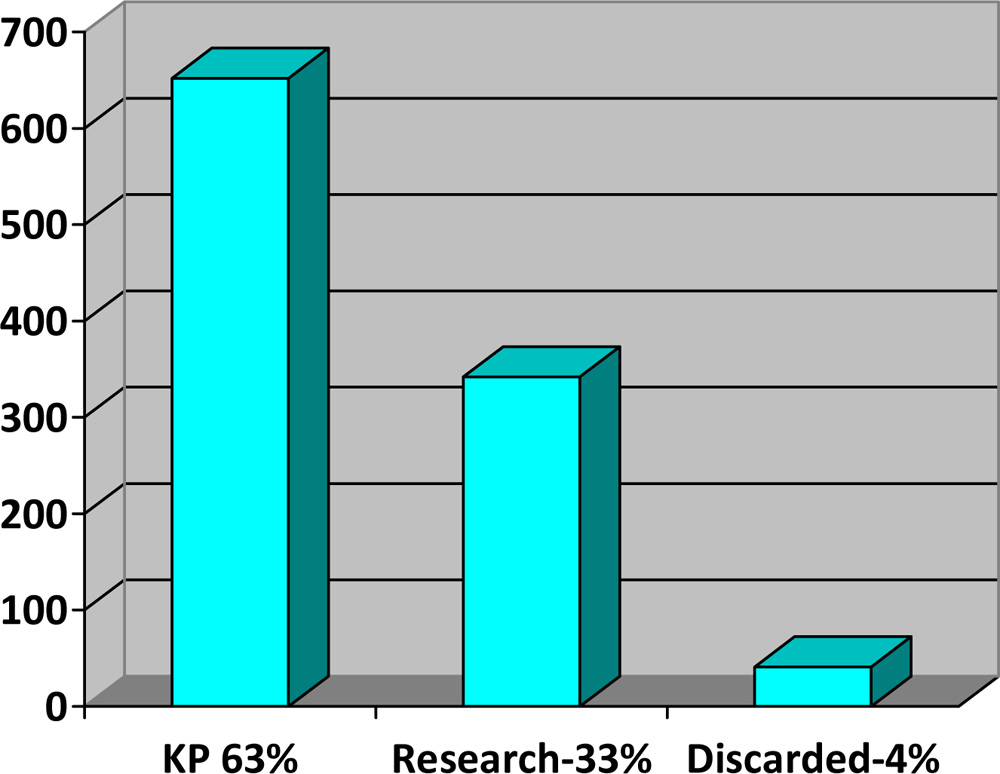
The common cause of death were old age, cerebrovascular accidents, cardiac problems, malignancy, renal failure etc. The time of enucleation after death varied form 30 minutes to 6 hours; average 2 hours. We have collected 3ml of blood from all cases for investigations and screening. 4 % of eyes were discarded after screening and blood investigations. 63% of the eyes received were utilized for keratoplasty and 33% were used for research purposes. Of the keratoplasties, 72% were for optical / visual purposes and 28% for therapeutic purposes to maintain the integrity of eye ball.
DISCUSSION
Though India require 200,000 corneas per year we are getting only about 44,806 corneas. This point out to the lack of active functioning eye banks in India and inadequate education and motivation of people. Everybody is interested only to sign the eye donation forms but has failed to follow up. The eye donation pledge has a role in creating awareness about eye donation among people. Among pledge card holders only 4 % are above 60 yrs of age; 64% are between 15- 40 yrs age and we have to wait for 20-50 years to materialize their pledge.
Future strategy for eye donation includes education work, formation of eye information centres, hospital cornea retrieval programs, proper training of corneal surgeons and strengthening the functions of Eye Bank Association of India. The Govt. of India have a definite program for setting up of eye bank in voluntary and government sector under the national program for the control of blindness. Out experiences has convinced us the important role of social and religious organization and its leaders in spreading the message of eye donation among people. These organizations have an active role in creating awareness and motivation of eye donation to clear the backlog of corneal blindness in India.
BIBLIOGRAPHY
1.ICMR
2.Burden of corneal blindness in India Indian Journal of Ophthalmology – 2013 oct- dec 38 (4)198-206
3.Eye banking and Eye donation in India- Dr Sunitha Chaurasia , Ramayamma International Eye Bank, LV Prasad Eye Institute, Hyderabad.
4.J Clin Diagn Res. 2015 Feb;9(2):LC01-4. doi: 10.7860/JCDR/2015/9157.5509. Epub 2015 Feb 1.Status of eye donation awareness and its associated factors among adults in rural pondicherry. Patil R1, E RP2, Boratne A3, Gupta SK4, Datta SS5.
5.Ann Transplant. 2016 Nov 15;21:701-707, Evaluation of Factors Limiting Corneal Donation, Röck D1, Wude J1, Yoeruek E1, Bartz-Schmidt KU1, Röck T1.
6.Indian J Ophthalmol. 2011 Jul-Aug;59(4):332-3. doi: 10.4103/0301-4738.82016. Eye donation: mere awareness and willingness not enough. Only a catalyst can improve corneal harvesting rates, Gogate B, Gogate P
Leave a Comment